


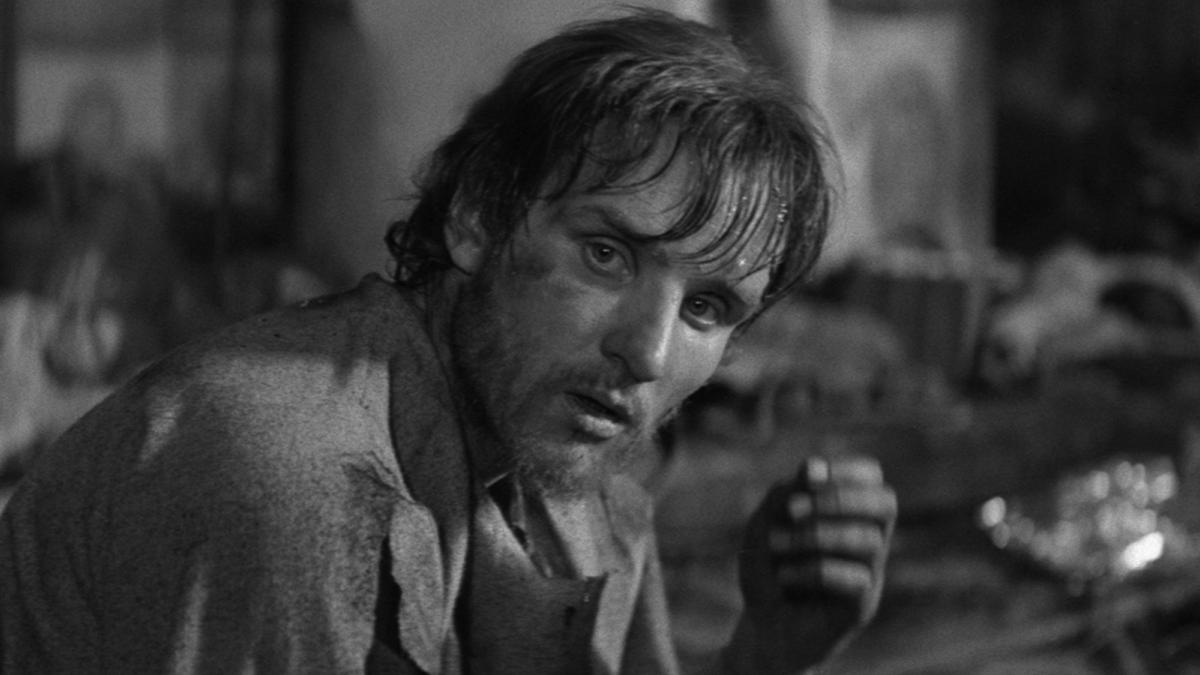
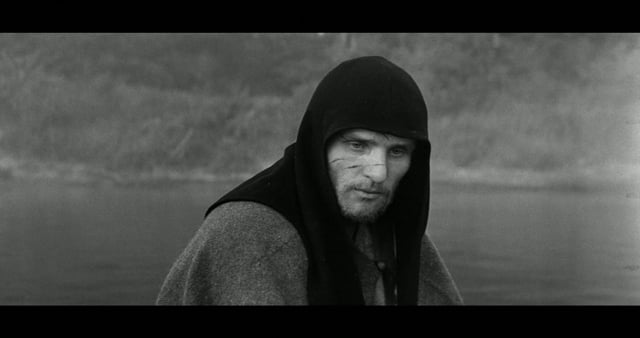
“A mesmerizing portrait of an artist and cleric undone by a world that is cruel, chaotic, unexplainable.” - Bilge Ebiri, The Village Voice
“A strong contender for the greatest Soviet film, Andrei Tarkovsky's second feature is immersive and overwhelming, steeping viewers in a stunningly detailed recreation of the medieval world and offering profound meditations on the nature of human suffering, the social value of art and religion, and the possibility of achieving transcendence in earthly affairs.” - Ben Sachs, Cine-File
With his second feature, a towering epic that took him years to complete, Andrei Tarkovsky waded deep into the past and emerged with a visionary masterwork. Threading together several self-contained episodes, the filmmaker traces the renowned icon painter Andrei Rublev through the harsh realities of 15th-century Russian life, vividly conjuring the dark and otherworldly atmosphere of the age: a primitive hot-air balloon takes to the sky, snow falls inside an unfinished church, naked pagans celebrate the midsummer solstice, a young man oversees the casting of a gigantic bell. Appearing here in Tarkovsky’s preferred 183-minute cut, as well as the version that was originally censored by Soviet authorities, Andrei Rublev is an arresting meditation on art, faith, and endurance, and a powerful reflection on expressive constraints in the director’s own time.
Awards & Nominations
1972 BFI London Film Festival - Official Selection
1972 Locarno International Film Festival - Official Selection
1973 New York Film Festival - Official Selection
Andrei Tarkovsky Retrospective
August 29–September 30, 2026
Born in Moscow and ending his life in exile, filmmaker, screenwriter, and film theorist, Andrei Tarkovsky (1932–1986) created some of cinema’s most indelible images in his relatively small filmography. Employing an innovative approach to cinematic time and painstaking world-building, Tarkovsky’s films are rich metaphysical explorations into historical and 20th-century Russian and Soviet life. Born to literary parents, his movies exhibit an innate poetic sensibility; small gestures and grand set-pieces become rich expressions of inner life, spirituality, and shared anxiety. Working often with cinematographer Vadim Yusov, Tarkovsky created a visual style that feels contemporary even 40 years after his death.
The Film Center is ADA accessible. This presentation will be projected without open captions. The theater is hearing-loop equipped. For accessibility requests, please email filmcenter@saic.edu