


“In its depiction of modern black lesbian life, its fictional secret history of an alternative black film culture and more, it’s an entertainment that’s also a challenge, one that subsequent American cinema, more than 20 years on, has yet to meet.” - Glenn Kenny, The New York Times
“Dunye's film is smart, sexy... funny, historically aware, and stunningly contemporary. The figure of Dunye's Watermelon Woman tells us more by her absence than she ever could in flesh and blood.” - Marjorie Baumgarten, The Austin Chronicle
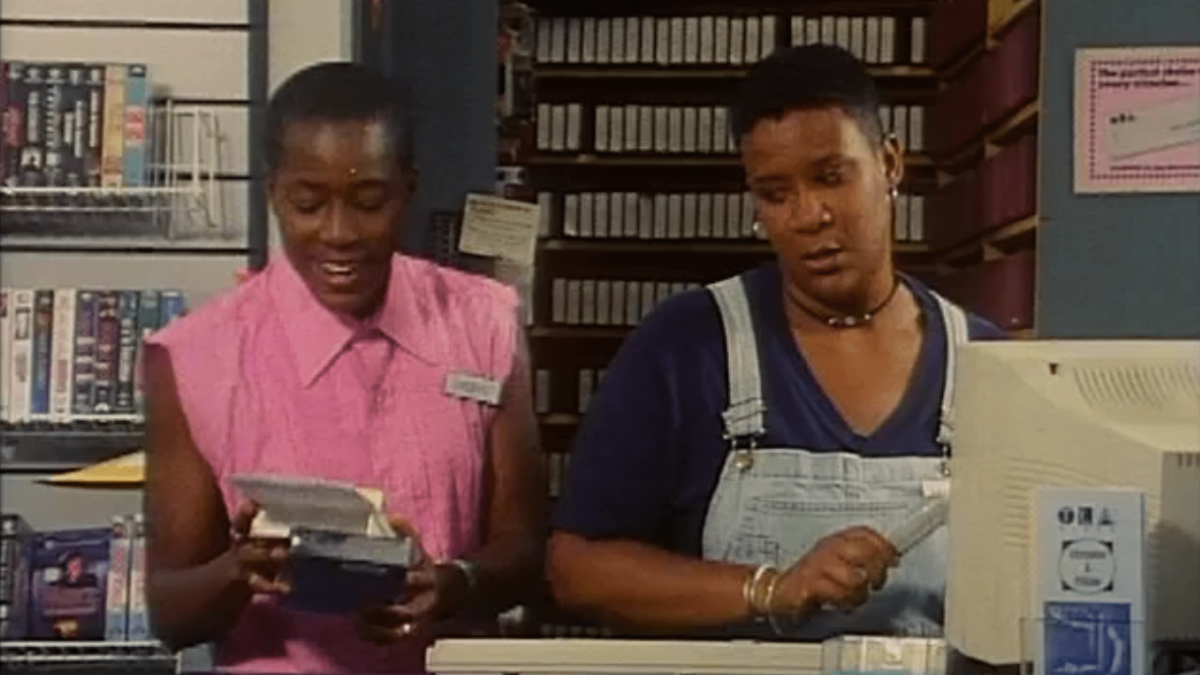
Cheryl Dunye made cinematic history with THE WATERMELON WOMAN, the first American feature to be directed by a Black lesbian as well as an incisive, humorous critique of classic Hollywood's racist stereotypes. Dunye plays an eponymous video store employee and burgeoning filmmaker who sets out to make a documentary on the "Watermelon Woman" (Lisa Marie Bronson), an actress who specialized in "mammy" roles for Hollywood productions of the 30s and 40s. As Cheryl uncovers the Watermelon Woman's identity she not only learns about a secret behind-the-scenes interracial romance but also begins one of her own with Diana (Guinevere Turner), a white woman who arouses the ire of Cheryl's best friend Tamara (Valerie Walker). A landmark of the New Queer Cinema, THE WATERMELON WOMAN testifies to the power of excavating legacies of oppression and in the process creates a progressive legacy of its own.
Awards & Nominations
1996 Berlin International Film Festival - Winner, Best Feature Film
1996 Toronto International Film Festival - Official Selection
1997 International Film Festival Rotterdam - Official Selection
20th Century Queers | July 4–30, 2026
Contemporary queer cinema enjoys more visibility and mainstream success than ever before, but many of its roots lie in avant-garde and underground filmmaking. The films in this series trace that history, showcasing queer artists, in front of and behind the camera, who disrupted traditional cinematic form to suit their purposes, whether creating coded stories, exploring stylistic pleasures, or grossing out the normies.
The Film Center is ADA accessible. This presentation will be projected without open captions. The theater is hearing-loop equipped. For accessibility requests, please email filmcenter@saic.edu